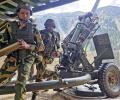
'Will this near-war, India's strongest military response so far, buy India another seven years of deterrence?' asks Shekhar Gupta.

The Border Security Force (BSF) is training specialized 'drone commandos' and 'drone warriors' for modern warfare, with plans to deploy them in missions like Operation Sindoor. A 'School of Drone Warfare' has been inaugurated to provide training in UAV operations, anti-drone warfare, and surveillance.
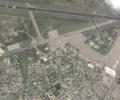
'We do not want to fall into a trap of uncontrolled escalation or all out conflict.' 'When the need arises we will do that.'
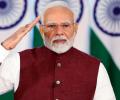
Operation Sindoor has carved out a new benchmark in our fight against terrorism, and has set up a new parameter and new normal. Operation Sindoor is not just a name but a reflection of the emotions of millions of Indians. Operation Sindoor is an unwavering pledge for justice. Terrorists dared to wipe 'sindoor' from the foreheads of our sisters; that is why India destroyed the very headquarters of terror.

Pakistan's Inter-Services Public Relations admitted three casualties among their troops at Rakhchakri in Rawalakot.

In his address, Sharif praised US President Donald Trump, saying his "efforts for peace helped avert a ... war in South Asia".
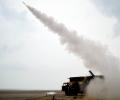
The Indian Army in the intervening night of May 8 and May 9 successfully repelled and responded to multiple drone attacks by Pakistan along the western border and the Line of Control (LoC) in Jammu and Kashmir.
'War is not an answer. War is not a solution.' 'Deterrence is a solution. We should have the stick with us with which we can beat Pakistan.'

Nepal turmoil: Kathmandu dropped as neutral venue for Blind T20 CWC for women
Two important Corps Commands at Multan and Bahawalpur, as also the posts of Adjutant General and Quartermaster General at General Headquarters now stand vacant, reveals Rana Banerji, who headed the Pakistan desk at RA&W.

'Pakistan's only concern has been while they were on the FATF watch list was to distance their State institutions and organs from any direct connection with the actual execution of militancy inside Kashmir.'
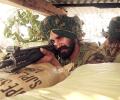
'Five hours of bombardment by the Pakistanis should not have happened.' 'India should have sent the air force to bomb the Pakistanis where they were raining fire on us.'

The hugely significant development comes just days after Rana's last-resort attempt to evade extradition to India failed after the US Supreme Court justices denied his application, moving him closer to being handed over to Indian authorities to face justice in the dastardly attacks.

'There has been no gentlemanness in the game. There have been very rude, arrogant gestures on the field.'

'He is intrigued by the intractability of Kashmir issue. With his interest in dealmaking and peacebrokering, he sees it as an exciting challenge to tackle.'

'Amrishji had a fascination for the colour red and wanted it in every movie costume of his.'

The external affairs ministry said the official has been given 24 hours to leave India.

A new book reveals that India and Pakistan discussed a communal division of Jammu & Kashmir along the Chenab river before the Kargil war in 1999.
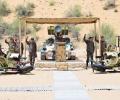
The Indian Army demonstrated how India's air defence systems saved the Golden Temple in Amritsar and other cities in Punjab from Pakistani missile and drone attacks on May 8 and 9, 2025.
The ministry of external affairs said the official has been given 24 hours to leave the country.

'Even known names and social media handles went berserk by stating that Karachi has been attacked and an F-16 was shot down.'

The textbooks also removed the title 'Father of the Nation' for Mujibur Rahman.

As a political storm brewed over Defence Minister A K Antony's statement on the killing of five Indian soldiers in Poonch, Congress today maintained he did not give a clean chit to Pakistani Army in connection with the incident.
Can Imperial Japan be forgiven for what it did to Indian soldiers it was supposed to protect as PoWs?

'Shock, confusion, and paralysis reigned.' 'Pakistan was caught in a most embarrassing situation. It could neither claim credit for the operation nor admit to a dismal intelligence failure and lack of army preparedness.'

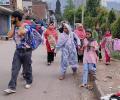
People along the Line of Control and International Border in the Jammu region continue to live under the shadow of death, with unexploded mortar shells fired by Pakistani troops still embedded in farmlands and residential areas even though hostilities have stopped for nearly a week. IMAGE: Kindly note that this image has been posted for representational purposes only. Photograph: / Rediff.com Despite the May 10 understanding between India and Pakistan, locals describe the border areas as a 'death trap'. Sixty-two-year-old Balvinder Singh, who returned to his home in Pargwal sector on May 14, recounted a narrow escape. "Two shells exploded in our compound, damaging our house. Three more landed on our farmland. We were terrified and told our family to stay away from the fields until the Army could help," Singh told PTI. Army engineers later came to the village and safely defused the unexploded shells, bringing a temporary sense of relief. "Fear is writ large on the faces of people to these death traps in border hamlets", he said. Scenes of destruction are evident rooftops torn apart, broken houses, windows punctured by shrapnel, and carcasses of cattle lying in pools of blood. The acrid smell of gunpowder still lingers in the air. Sardar Gurmeet Singh faced a similar ordeal. His family could not re-enter their home as a live mortar shell had sunk into the compound in a village close to the International Border. "The army's bomb disposal squad removed it after four days, allowing us to finally enter, back home," he said. Indian Army engineers have launched a sweeping clearance operation across border districts, defusing over 80 unexploded shells in the past five days -- including 6 in Pargwal, 19 in Rajouri, 42 in Poonch, and 12 along the IB. "These shells, mostly 120 mm calibre, have a range of 15 to 30 km and pose a serious threat to both civilian and military targets," an Army officer said. "Many of them were fired by Pakistan during recent hostilities." On May 7, the Indian Army launched Operation Sindoor, conducting precision strikes on nine terror hubs in Pakistan and Pakistan-occupied Jammu and Kashmir (PoJK) in response to the April 22 terror attack in Pahalgam that killed 26 people, most of them tourists. The subsequent retaliation by Pakistan pushed the region to the brink of war. From 7 to 10 of May, 27 civilians were killed and over 70 injured in Pakistani shelling in the Jammu region. Farid Din Gujjar, a resident near the border, expressed fear about returning to his fields. "Several shells created deep craters in our paddy land. We cannot resume work until all unexploded ordnance is cleared. It's a death trap," he said. Army units, in coordination with Jammu and Kashmir Police, have evacuated high-risk zones and issued stern warnings to residents not to touch any suspicious objects or unexploded shells. In one major operation, 42 live shells were safely destroyed in the Poonch villages of Jhullas, Salotri, Dharati and Salani. "All safety protocols were followed. The shells posed a serious danger to local lives," an Army spokesperson said, calling the effort a 'continued commitment to protect civilians and restore normalcy'. Poonch saw the vast majority of deaths due to shelling. Security officials said that Pakistan used a mix of mortar shells, armed drones, and missiles during the shelling spree, specifically targeting civilian habitations and border towns in Jammu, Samba, Kathua, Rajouri, and Poonch. As clearance operations continue, the border residents are slowly returning to their homes, but with caution, fear, and lingering uncertainty about shelling that may yet happen in the future.
With the death of the three JeM terrorists in Anantnag, the number of terrorists killed in two gunfights, which broke out in South Kashmir on Wednesday night, has risen to six.
This was the third consecutive night that Pakistan resorted to unprovoked firing along the Line of Control.
India has called Pakistan's nuclear bluff with Operation Sindoor and sent a psychological message to state-sponsored terrorists: nobody is untouchable and no place in Pakistan is safe for you, government sources said on Sunday.

The closed-door luncheon meeting came amid escalating tensions between Israel and Iran with Trump exploring Washington's possible involvement.
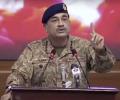
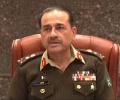
Asim Munir and his brand of short-sighted army officers give no inkling of paying heed, changing course or learning lessons from the past, observes Rana Banerji, who headed the Pakistan desk at RA&W.

Defence Minister Rajnath Singh held a comprehensive review of the national security scenario with top military leadership in India. The meeting comes after Pakistan's recent attempts to target Indian military installations using drones and missiles were thwarted. The meeting discussed the evolving security situation and the Indian military's response to the Pakistani attacks.

Experts believe it would be far-fetched to believe that Riyadh would support Pakistan militarily in any conflict with India, which has robust strategic and economic relations with Saudi Arabia.
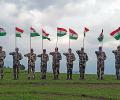
With respect and gratitude we honour the memory of soldiers who sacrificed their lives in Operation Sindoor.

'Fears in Washington began to intensify when it was realised that subsequent Pakistani and Indian attacks on major military facilities -- which were significant in terms of geographic scope and intensity -- could rapidly take both sides to where neither actually wanted to go.' 'The US objective was to stop the fighting as soon as possible. Everything else was secondary.'

India and Pakistan agreed on May 10 for a cessation of firing and military activity as a result of 'direct contact' between the director generals of military operations (DGMOs) of both nations, which was 'initiated by the Pakistani side', the Centre informed Parliament on Friday.

A flag meet, scheduled for Saturday, between Indian and Pakistani Armies on ceasefire violations and cross-Line of Control firing in Jammu and Kashmir's Poonch district was cancelled by Pakistani army without assigning any reason.

In a post on X, he said the people of Balochistan have given their "national verdict" and that the world must no longer stay silent.
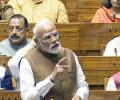
What was the aim of Operation Sindoor? Why was the operation halted so soon? asks Lieutenant General Prakash Katoch (retd).

'Pakistan wanted India out of Afghanistan to which again the Taliban told Pakistan to take a walk.' 'Six months after they came back to power in 2021 India was back in Afghanistan at the request of the Taliban.' 'The Taliban realised that India has no agenda of its own in Afghanistan.'
